The pelvic floor is not just a postpartum matter
"That must be some new trend," an 80-year-old patient told me. The pelvic floor goes far beyond postpartum — let me explain.
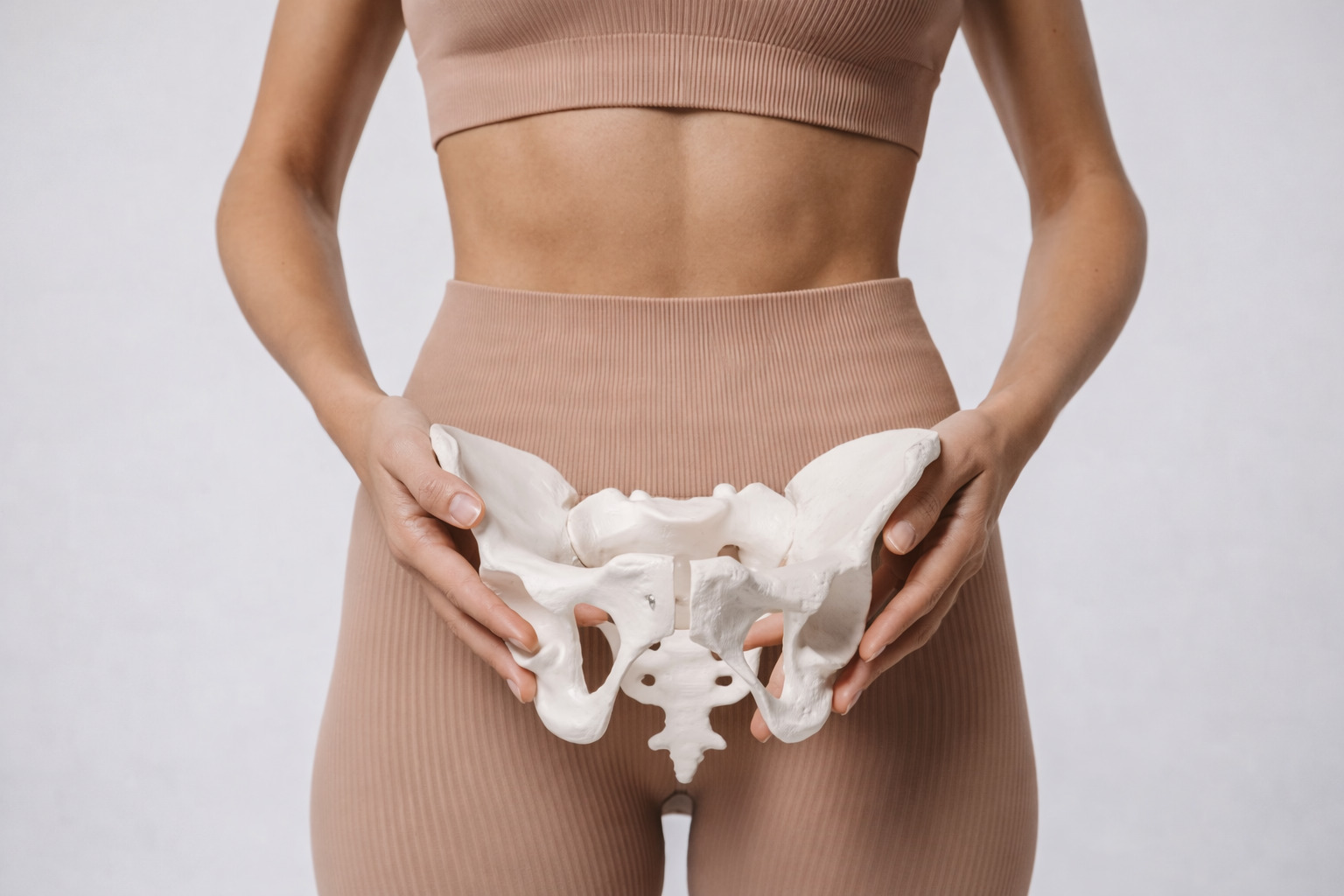
The other day in the clinic, when I asked an 80-year-old patient about her pelvic floor, she replied, "that's very trendy now, isn't it?". "Blessed trend, AT LAST!" I answered her…
We already know that many years ago, when our grandmothers or mothers gave birth, no one named the muscles that suffered so much during the 9 months of pregnancy and during labour. Those muscles, collectively called the PELVIC FLOOR, were non-existent. And at last, as Mrs Aurelia told me, "it's trendy". At last, it's being studied, talked about and starting to be understood.
Although there's still a big mistake many people make. Well, to be honest I'd say TWO big mistakes:
- Men still think this is only a women's thing… I don't know what they'd call the muscles that hold up their own pelvis. Because yes, that's pelvic floor too.
- Many women (and of course men) think the pelvic floor is a pregnancy/postpartum thing. And especially after a vaginal birth. A BIG MISTAKE, friends!
The pelvic floor is much more than that. And so you understand, in case there's still someone unaware of what we're talking about, I'll give you a brief explanatory summary.
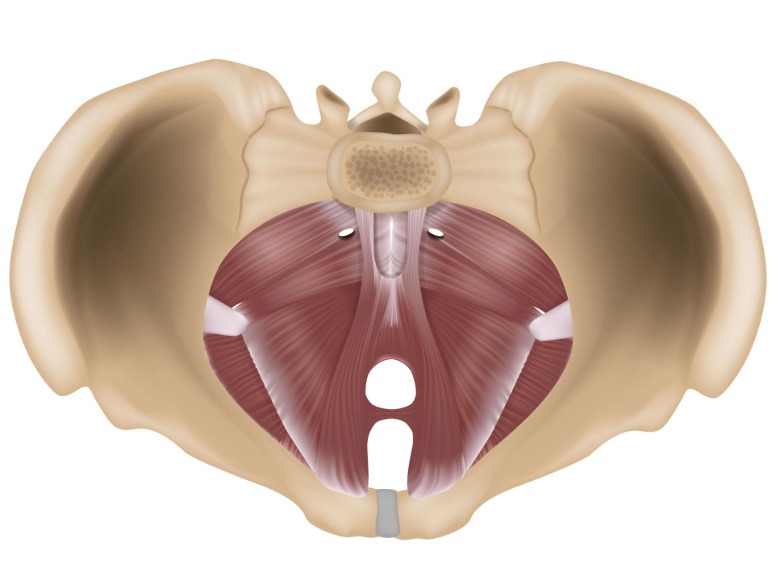
PELVIC FLOOR = A group of muscles located at the base of the pelvis. Its main function is support, simply because of its location — I think we can all take that as read. But… it's also involved in:
- Managing intra-abdominal pressure.
- Digestive processes, as well as DEFECATION.
- Reproductive processes.
- And as we've already discussed, pregnancy and birth.
ps: A picture is worth a thousand words. And here it is.
And the question of the century:
WHY DO WE WOMEN HAVE MORE PROBLEMS WITH THE PELVIC FLOOR?
Well, making things simple and being clear:
- Because we have one more little opening than men.
- Because it's a tissue very closely tied to hormones. And in that… the male sex doesn't beat us, because if there's one thing we are, it's little hormones with legs.
For a long time — some reader has surely heard this — it was said that to work the pelvic floor you should stop your flow while urinating. But SSSSTOP!! Let's get rid of this bad myth/habit, because we don't want your vaginal bacteria to play tricks on you with a possible infection.
And with this, I want to make clear that the pelvic floor isn't just "squeeze and release", it's much more than that.
It's coordination, abdominal pressure, breathing and real strength.
Would you know how to activate your pelvic floor for me? I'm going to put you to the test.
Right in whatever position you're in (sitting, standing, lying down…) you're going to start getting to know that muscle group in your pelvis. The action I want you to do is the following:
- You're going to contract your vagina, as if you didn't want the pee to come out, and you'll locate your anus, closing it as if you didn't want to let out a little fart.
- Once you've got it, we'll hold that contraction for 3 seconds and you'll repeat it 3 times.
Got it? There you're connecting with your slow fibres, the ones that — when you need to pee and your bladder starts to fill — will be able to keep the pee from escaping. You've now met them, but… it doesn't end here, shall we carry on, right?
- You're going to locate the vagina and anus again, and now we'll assess the fast fibres. The ones that, when you cough or sneeze, have to close so the pee doesn't escape.
- I close the vagina and anus, and we'll do a one-second contraction and relax for another second. Like that up to 10…
Were you able to?
I have to tell you that during pelvic-floor activation, we have to avoid over-activating the abdomen or the glute. If you did, don't worry, repeat it and control it. It may simply be because you're starting to get to know your pelvic floor, or perhaps because you need to work on it a little. And don't worry, that's what we're here for in physiotherapy, to help you.
What I do want to be SUUUPER CLEAR is: do NOT normalise these little things:
- Leaking drops of pee when you laugh
- A feeling of a lump or vaginal heaviness
- Feeling pressure when running or even leaks
- Pain during sexual intercourse
- Feeling that the abdomen isn't holding the weight and everything is dropping onto the pelvic floor.
- Pain during your period
If you have more than one check from all of these, DEAR, I'M WAITING FOR YOU AT FIMED, because this needs working on, no question.
Remember how "insistent" I am on social media about that coordination between the abdomen and the pelvic floor. We need it!
If the abdomen doesn't connect, the pelvic floor fatigues.
DO YOU KNOW YOUR ABDOMEN?
DO YOU KNOW YOUR PELVIC FLOOR?
DO YOU KNOW IF THEY COORDINATE WITH EACH OTHER?
To finish, I'm going to put you to the test so you can assess yourself.
- DO YOU KNOW YOUR ABDOMEN?
Lying face up, with your knees bent and one hand on your lower abdomen, just below the navel. When you're ready, COUGH. And now, answer these questions:
- Was your hand pushed upwards by your abdomen?
- Did your pelvic floor push out of the vagina? Or did it draw upwards?
- DO YOU KNOW YOUR PELVIC FLOOR?
Grab a mirror, and first, look at your vagina. Make sure there are no odd freckles, little marks… check that everything is fine externally, and assess your labia. It's veeery important that you know it.
And next, get into a comfortable position. I advise you with your foot up on the toilet or bathtub, because you're going to insert two of your fingers into your vagina.
- Does it hurt on entry?
- Close the vagina and anus as you did in the earlier practice and feel how the vaginal walls squeeze your fingers. A lot or a little force? Do you feel fatigue?
- DO YOU KNOW IF THEY COORDINATE WITH EACH OTHER?
Stand up. Barefoot if possible, GREEEAT.
Cough again. And watch what happens with your abdomen. Do you send a lot of pressure down to your pelvic floor? Or is it able to hold your abdomen? Does your pelvic floor push? Or draw in?
Don't worry if there's pain, if you don't connect well or if you find yourself very uncoordinated.
The important thing is that you already have some body awareness. You now know how to locate this muscle group and you even know how to activate it. Now perhaps the next step would be to start working on it so it does its job well.
A pelvic-floor assessment at some point in your life can be the solution to many future problems. Even back and hip pain.
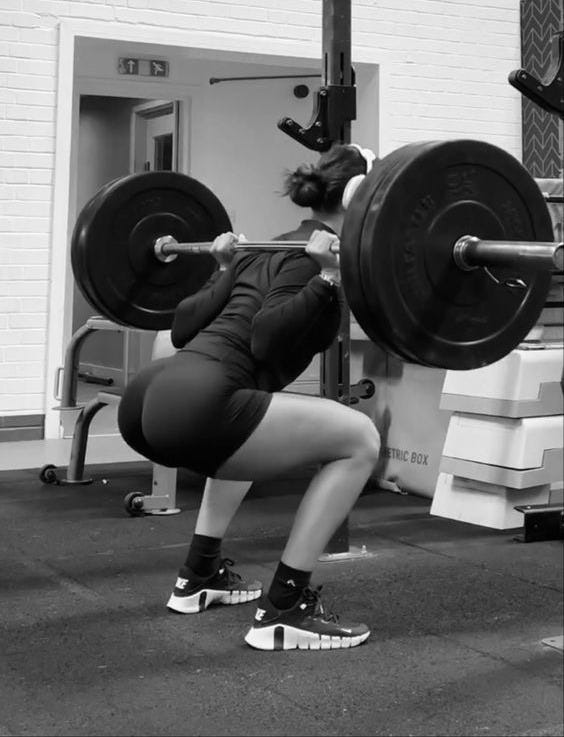
Did you know that the pelvic floor supports up to 1.5 times your body weight when jumping/running?
The importance of knowing it, caring for it and pampering it.
It's not all weakness, it's not all tension. It's simply about assessing and adapting to each body.
Make the most of this month of MARCH — at FIMED we always get more women than ever — and we have a super promo on FRIDAY the 7th to help you with your pelvic floor. If you're interested, write to me or check our social media, and by the end of the week you'll have news.
And of course, a reminder that on 12 APRIL we're getting together:
NUTRITION + PHYSIOTHERAPY to help you with menstrual pain.
So you don't normalise it, and to help you with tools to eliminate it and learn how to manage it.
I hope that after reading these basic lines about your pelvic floor, at least today, you're aware of it.
Thank you for a little while here with me.
I read you on social media.